Free Denton figure check

Denton CPA alternative for a banker's figure.

Four taps. The month under that number comes first.

On the Square, the figure still has to match.

Question 1 of 4

What should we sort before the meeting?

Question 2 of 4

What is on the page you would hand over?

Question 3 of 4

When was the last month actually closed?

Question 4 of 4

When does someone else need the number?

A quick check

Does the loan file require a signed report?

An audit, a review, or a compilation is written so someone outside the company can rely on it: a covenant in a note, investors, a grant, or a board rule. One profit line for a Denton lender is almost never that document.

For a Denton figure, the CPA alternative is a Tax CFO.

Steven Palmieri is a Tax CFO, not a CPA firm. A Tax CFO closes the month to the bank first, so the profit and cash you hand a lender are the same numbers you can explain. The free call looks at that page and says whether the work fits.

You will be talking to the Steven Palmieri practice.

Next you pick a time for a free video call with the Steven Palmieri practice. Nothing to sign, nothing to pay.

Prefer to read first? It's all below ↓

CPA Denton CFO AlternativeThe month closed, the year still open

We close the books against the bank, set payroll up on the provider you already use, and write the return while the year can still change.

A Tax CFO named Steven Palmieri, the Entrepreneur's CFO, puts the agreed month in your hands first.


cpa denton cfo, then a grey figure turns gold as the month ties to the bank
The Denton County Courthouse on the Square, lawn and trees in front of the stone tower.
Start the close

What we should close first

Steven Palmieri, Tax CFO

You will be talking to the Steven Palmieri practice.

The Tax CFO way with a banker's question.

A CPA gives the banker last year's number. The Tax CFO closes this month first, hands over a number that is still true, and then decides what the next quarter should look like with the same numbers. December can still change what this close shows.

A year you can still steer

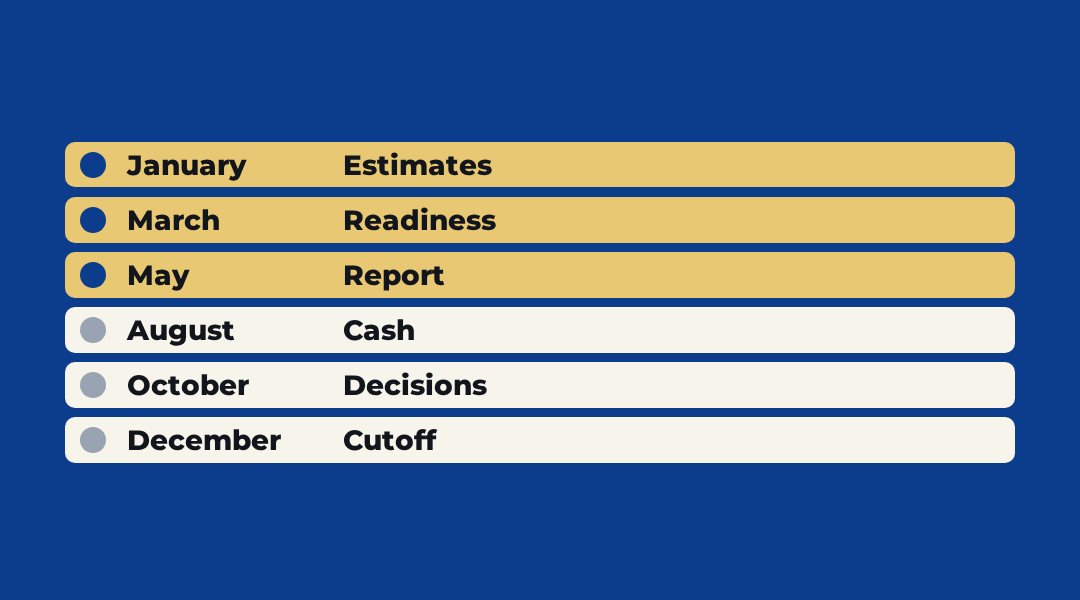
Six months on the year line, each lighting with its one event

Six points when the year still moves

Open a month.

  1. 1January estimates

    The first estimate of the year should come from months that already closed, not from a hope scribbled after the holiday lighting on the Square.

    We draft it with you, and you decide what to send.

  2. 2March readiness

    By March the return should be a stack of closed months with a few open questions, not a year that still has to be built.

    You confirm the life changes. We assemble March only from months the bank already recognized, including a gig weekend.

  3. 3May report

    May's franchise report does not ride along with the profit page. It has a spring date of its own.

    The franchise report carries your signature. We build it only after the books and the bank already tell the same year.

  4. 4August cash

    Midyear cash is a look at what already happened, updated when the newest month closes.

    We read it with you in plain words, including a thin month.

  5. 5October decisions

    While the books are still open, what you pay yourself, a retirement set-aside, and a purchase you can delay are still levers on the year.

    We put the choices on one page. You pick.

  6. 6December cutoff

    The last invoices and the last owner draws belong in the month they happened, even when the party runs late.

    We hold the cutoff with you so January starts clean.

Open October

The Denton County Courthouse on a clear day, stone facade and clock tower.
Steven Palmieri

From Steven Palmieri

Tax CFO, the Entrepreneur's CFO

We read the ugly month too.

Start from the last month

Tell us the newest month you would still show a banker.

Steven Palmieri, Tax CFO

You will be talking to the Steven Palmieri practice.

What a finished month actually contains

A finished month is quieter than people expect. Either the cash number agrees with the bank, or the gap is written as a few items a second person can check. Sales tax collected in the month is set aside from sales tax that belongs to the next month. The payroll journal from the provider you already use is posted, and owner draws are not hiding inside supplies.

We do that work with you on a screen share. You see the items that did not clear. You see the cutoff. When we call the month finished, the number on the front page is a number the bank would recognize.

The courthouse restoration for the 1986 sesquicentennial is a building story we share with neighbors. That year on the stone does not close the month a banker is asking about.

The Denton Community Band and Jazz Ensemble has played local concerts since 1976, a Saturday we share with neighbors. The deposit from one of those nights still belongs to the week it was earned. A beautiful Saturday does not move the cutoff.

What a banker is usually asking for

The request sounds large and is often small. One page. Profit, cash, and whether the books are current. The trouble starts when that page is a feeling. A feeling cannot be tied to a statement, and a statement that was never closed cannot be tied to the bank.

A modest page the bank would recognize beats a thick packet nobody opens. If the last closed month is older than you want to say out loud, that is the work, and it is ordinary. We name that gap in the first conversation, before anyone pretends the courthouse lawn is a financial statement.

Nothing on that page is a signed assurance report. If the lender wants a signature we do not hold, we tell you before you spend a month pretending otherwise.

Payroll set up, and the month beside it

Friday's checks still leave from the payroll company you already picked. We connect that company to the books, keep what you pay yourself on its own line, and leave the payday button in your hands.

A new hire, a contractor who might belong on payroll, or a first salary for an owner are setup questions. They get a written note and a provider, not a promise that a software screen will decide them.

Once the journal posts every pay period, the month can close without a scavenger hunt through a bank feed. What eases the month is a written decision about what each line means. The feed was only the raw material.

A Friday payday earned on the Square still belongs to the week the hours were worked, and the journal we post names that week.

Decisions while the year is still open

By the fall you should be able to say, roughly, where the year is heading. Owner pay, the tax you set aside, and what stays in the company are three decisions, and they lean on each other. A purchase you can delay is both a cash question and a tax question. We put both on one page.

If the months under that page are not closed, the page waits. A plan built on an open month is a wish. We would rather adjust the set-aside in the fall than unpack a shock when the return is already late.

Retirement contributions get talked through before the deadline, with the cash actually on the table. The useful plan names a few moves for this quarter. It does not lecture you about a year you cannot change.

If you want the longer version